Case StudiesBlogAbout Us
Get a proposal

Enter development with a scope you can trust.

Scope Building aligns your stakeholders, validates your idea with real users, and delivers a development cost estimate, so your team starts building with confidence.

Tell us about your project

Trusted by enterprises across Europe and the US:

Siemens
Siemens Healthineers
PwC
Geberit
Toyota
Rainbow
Chooose
Omnipack
Lexolve

Do any of these

sound familiar?
We have research but no clear scope.
We do not know which features to cut.
Your cost estimate would not survive a board review.
Scope expands after development begins.
Stakeholders cannot agree on the MVP.
What is Scope Building?

What is Scope Building?

Scope Building is the bridge between knowing what to build and actually building it. AI tools can generate wireframes and feature lists in minutes, but they cannot tell you how real users will actually use what you are planning to build. And they cannot give you a trustworthy cost estimate.

We combine AI-accelerated analysis with structured stakeholder workshops, independent technical review, and real user testing to deliver a scope your entire organization can commit to.

Let's talk

Our process & deliverables

01

Workshops

We start by running structured workshops with your team to clarify your product vision, align on priorities, and define the expected scope. Every decision from this point is grounded in what came out of those sessions.

VISION AND SCOPE ALIGNMENTCOMPETITOR ANALYSISFEATURE MAPPINGPRIORITY DEFINITIONWORKSHOP DOCUMENTATION

02

Feature Prioritization

Based on workshop outcomes, we build a feature list ranked by user value, business feasibility, and development cost. You know exactly what belongs in the MVP and what to defer to later releases.

FEATURE LIST DEFINITIONBUSINESS AND USER VALUE SCORINGMVP VS. POST-MVP SPLITFEATURE PRIORITIZATION REPORT

03

Technical Analysis

We conduct a technical analysis of the defined scope to confirm it is feasible and realistic. Our senior engineers review the scope against your existing tech stack and infrastructure constraints.

TECHNICAL FEASIBILITY REVIEWCOMPLEXITY ASSESSMENTSCOPE REFINEMENTTECHNICAL RECOMMENDATIONS

04

Wireframe Design

We build high-fidelity interactive prototypes designed for deep user feedback and rapid iteration. By combining human expertise with AI-driven workflows, our designers and engineers ensure every build respects technical constraints and logical consistency.

LOW-FIDELITY WIREFRAMESUSER FLOW DESIGNCORE SCREEN MAPPINGPROTOTYPE PREPARATION

05

User Testing

Targeted usability testing that catches friction early. We solve problems in the wireframes, where fixes cost hours, not sprints.

USABILITY TESTINGUSER FEEDBACK COLLECTIONUX ISSUE IDENTIFICATIONPROTOTYPE ITERATION

06

MVP Definition and Handover

Our handover package fits any team, ours or yours. If we build it, the transition is seamless. If you move to another partner, our documentation stands on its own.

FINAL MVP FEATURE SPECIFICATIONDEVELOPMENT COST ESTIMATIONTESTED WIREFRAMESTECHNICAL RECOMMENDATIONSDEVELOPMENT-READY DOCUMENTATION

4 reasons enterprise teams scope before they build.

Your budget is committed to a validated scope.

Your development investment is based on a feature set tested with real users and reviewed for technical feasibility, not a guess.

Technical and UX risk eliminated before the first sprint.

Overly complex features are simplified. Usability issues are caught. Both happen at the wireframe stage, where changes cost hours — not after launch, where they cost quarters.

Outpace your competitors.

User behavior data reveals what your users actually value and where they struggle. Acting on observed behavior before the market catches up is a real advantage.

Your team starts development fully aligned.

Workshops and documentation give every stakeholder — product, engineering, and business — a shared, documented understanding of what is being built, what was deferred, and why.

From discovery to delivery.

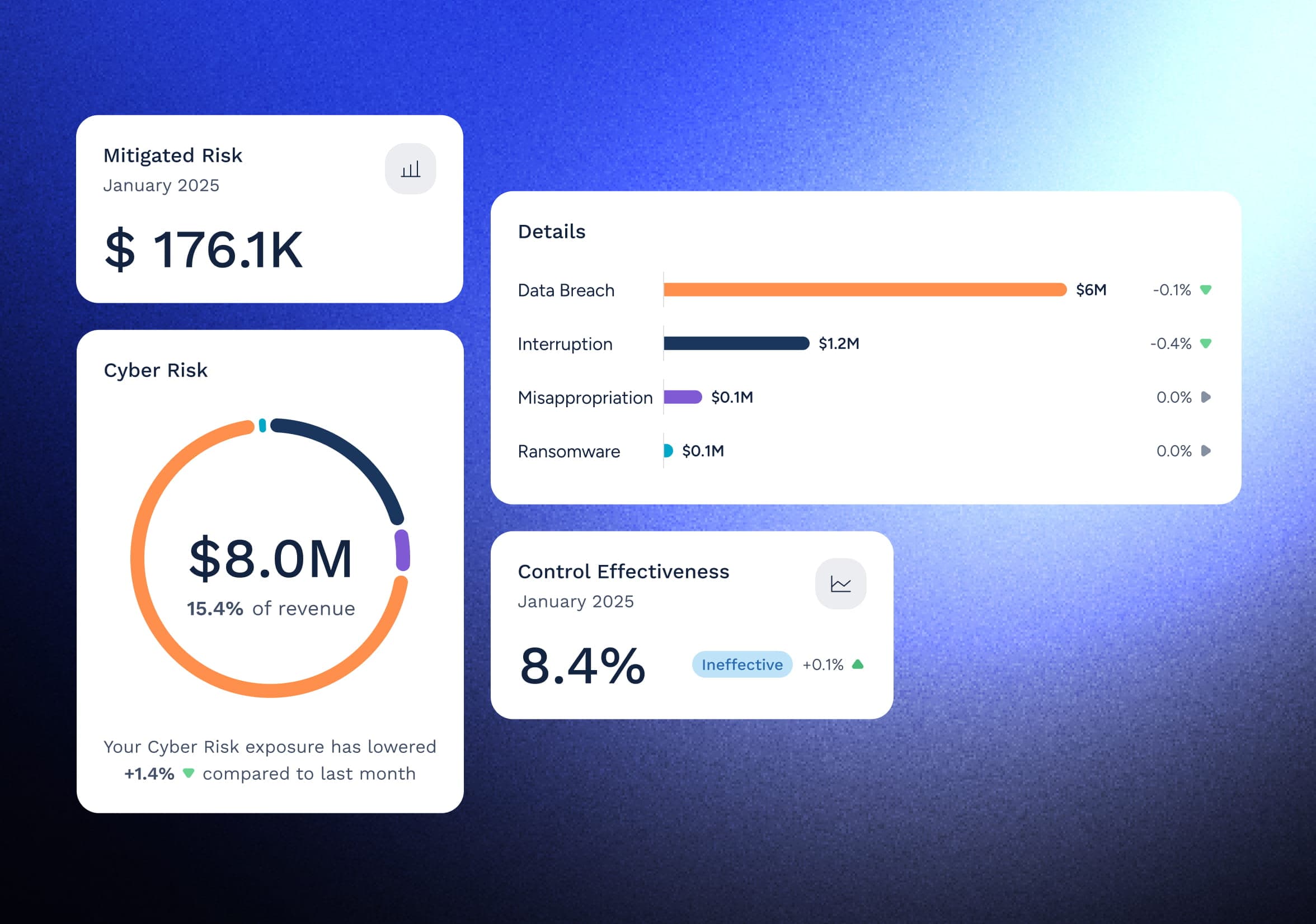
Cyber risk decision-making web dashboard—SSIC scalable platform for C-suite risk mitigation

Legacy Data into an AI-Powered Cybersecurity Management Platform

Securing Fortune 500 partnerships and tripling the corporate customer base through a millisecond-fast cybersecurity SaaS application.

View all projects

Frequently asked questions

What is Scope Building and how is it different from Product Discovery?

Product Discovery is for teams that need to validate a new product idea and understand what to build. Scope Building is for teams that have already done that research and now need to define exactly what the MVP contains, test it with users, and get a development cost estimate. Discovery answers "should we build this?" Scope Building answers "what exactly are we building, and what will it cost?"

When should an enterprise team run Scope Building?

Scope Building is the right step when you have existing research about your users and their problems, a defined value proposition, and a general idea of the features you want to build. You need a tested, prioritized scope and a cost estimate before committing to a development team. If those conditions are met, Scope Building is your next step.

Can't we just use AI tools to do this ourselves?

AI tools are excellent at generating wireframes, feature lists, and even rough cost estimates. What they cannot do is align your stakeholders on hard trade-offs, test prototypes with real users from your target market, or conduct a technical feasibility review against your existing infrastructure. Scope Building combines AI-accelerated analysis with the human judgment and facilitation that enterprise decisions require.

What happens after Scope Building? Can you also build the product?

Yes. Many of our clients move directly from Scope Building into development with us. The transition is seamless because the team that defined the scope is the same team that builds it. If you prefer to work with your own engineering team or another partner, the deliverable package is fully self-contained.

What does Scope Building deliver?

At the end of Scope Building you receive: a finalized MVP feature specification, a development cost estimation, tested low-fidelity wireframes, a technical feasibility assessment, and full development-ready documentation. Your engineering team can begin development without waiting for additional clarification.

How long does Scope Building take?

A typical Scope Building engagement runs 2 to 5 weeks depending on the complexity of your product and the number of features being scoped. You receive the complete deliverable package at the end. For teams with tighter timelines, we can discuss a condensed version.

How do you decide which features go into the MVP?

We rank features by three criteria: user value, business feasibility, and development cost. Features that score high on all three go into the MVP. Features that are technically complex, high cost, or low user value are deferred to later releases. Every prioritization decision is documented with clear rationale.

Do we need to have completed Product Discovery before Scope Building?

Not necessarily. You need well-documented user research and a defined value proposition before Scope Building begins. If you have that from your own internal research or a previous engagement, we can start directly. If your research is incomplete, we would recommend beginning with Product Discovery or Direction Check first.

Can Scope Building be applied to an existing product adding new features?

Yes. If you are planning a significant new feature set or a major redesign, Scope Building works for existing products too. The process is the same: we define the scope, prioritize features, validate feasibility, test wireframes with users, and deliver a cost estimate. The starting point is your existing product context rather than a blank canvas.

Ready to define your MVP scope?

Talk to our product team. We will walk you through what Scope Building looks like for your context.

Book a 30-min call

Work with a team trusted by top-tier companies.

Rainbow logo
Siemens logo
Toyota logo

We build what comes next.

Company

Industries

Startup Development House sp. z o.o.

Aleje Jerozolimskie 81

Warsaw, 02-001

VAT-ID: PL5213739631

KRS: 0000624654

REGON: 364787848

Contact Us

hello@startup-house.com

Our office: +48 789 011 336

New business: +48 798 874 852

Follow Us

Award
logologologologo

Copyright © 2026 Startup Development House sp. z o.o.

EU ProjectsPrivacy policy