Understanding Custom Healthtech Software Development: A Clear Guide
Alexander Stasiak
Oct 08, 2025・8 min read
Table of Content
Introduction to Healthtech Software
What is Healthtech Software?
Importance in Modern Healthcare
Key Components of Development
Essential Features to Consider
Security and Compliance Concerns
Custom vs Off-the-Shelf Solutions
Benefits of Custom Software
Limitations of Prepackaged Software
Development Process Overview
Planning and Requirement Gathering
Design and Prototyping
Future Trends in Healthtech
Emerging Technologies
Potential Challenges and Opportunities
Most healthtech solutions feel like they were made for someone else’s needs, not yours. When off-the-shelf software slows down your team or misses key features, frustration builds fast. Custom healthtech software development services offer a way to build tools that fit your exact workflow and patient care demands. This guide will show you how tailored software can make your work smoother and more effective.
Introduction to Healthtech Software

Healthtech software has become an essential companion in the modern medical world. It's more than just code; it's about improving how healthcare operates every day.
What is Healthtech Software?
Healthtech software combines technology with healthcare services. It includes applications that help manage patient records, schedule appointments, or even assist in diagnoses. Think of it as a digital assistant for medical professionals, streamlining tasks that can be time-consuming. With the right software, you can focus more on patient care and less on administrative duties.
Importance in Modern Healthcare
In today's fast-paced world, healthcare needs to keep up. Healthtech software plays a crucial role in this. It provides faster access to patient data, ensuring that you have the information you need right at your fingertips. This quick access can lead to better decision-making and, ultimately, improved patient outcomes. Most people assume healthcare is slow to change, but the truth is, it's rapidly evolving with technology at its core.
Key Components of Development

Understanding the building blocks of healthtech software is vital. Let’s explore what makes it work and why these components matter to you.
Essential Features to Consider
When developing healthtech software, certain features are key. User-friendly interfaces ensure ease of use for both medical staff and patients. Interoperability allows the system to work seamlessly with other software, which is crucial for comprehensive patient care. Imagine a system that updates patient data in real-time, reducing errors and enhancing efficiency.
Security and Compliance Concerns
Security in healthtech software isn't just a bonus; it's a necessity. Protecting patient information is critical, and complying with regulations like GDPR or HIPAA is non-negotiable. Data breaches can be costly, both financially and reputation-wise. By prioritizing security, you safeguard your practice and maintain trust with your patients.
Custom vs Off-the-Shelf Solutions
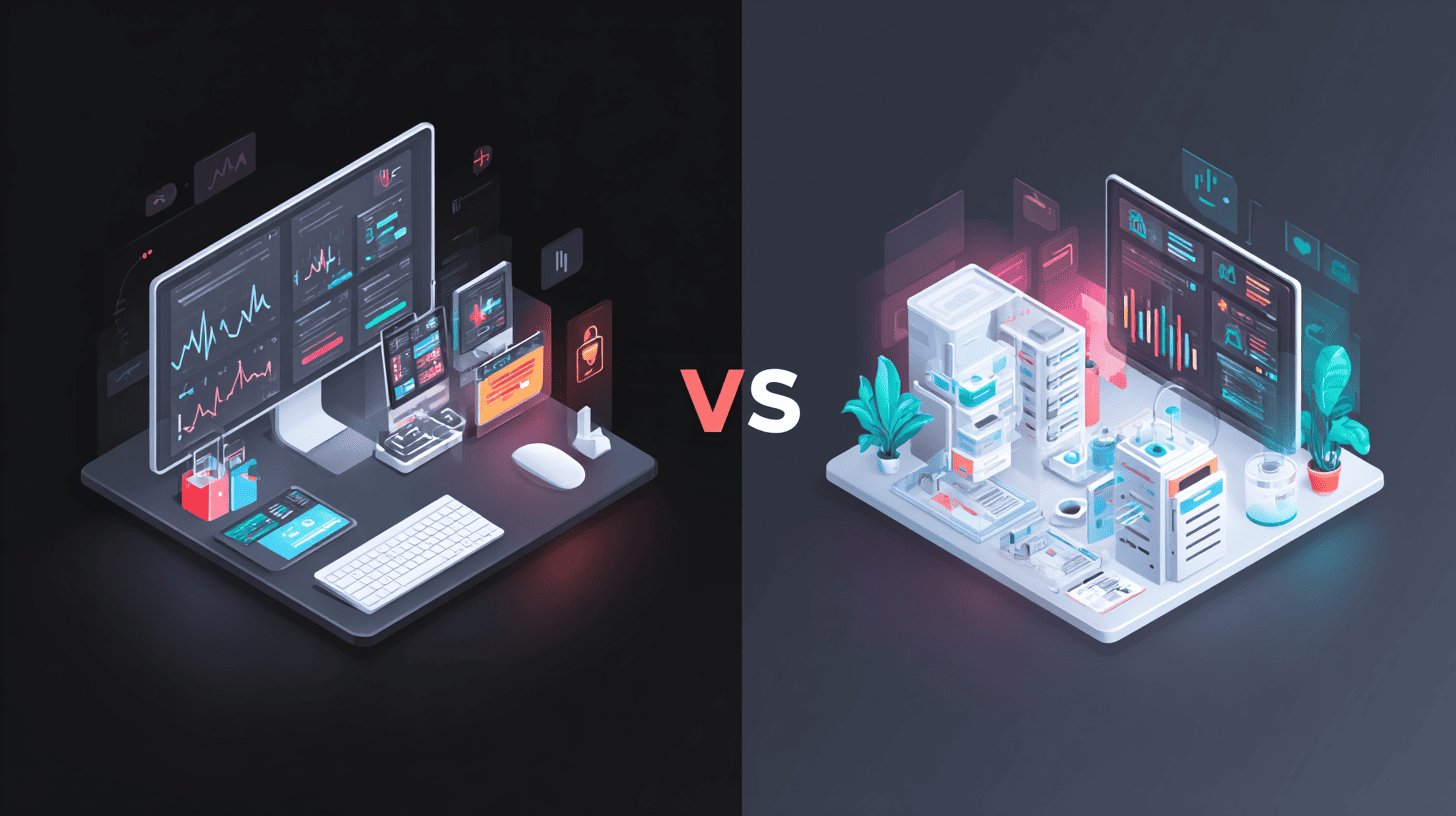
Choosing between custom and prepackaged solutions can be tough. Each has its own set of advantages and drawbacks. Let’s break it down.
Benefits of Custom Software
Custom software is designed with your specific needs in mind. It adapts to your workflow, not the other way around. This means increased productivity and fewer frustrations. Unlike generic software, custom solutions grow with your practice, allowing you to scale and evolve. The longer you wait to implement a tailored solution, the more opportunities you might miss.
Limitations of Prepackaged Software
Prepackaged software can be a quick fix, but it often lacks flexibility. These solutions typically offer a one-size-fits-all approach, which might not meet all your needs. You might find yourself trying to fit your workflow into their system, rather than the other way around. Imagine trying to fit a square peg into a round hole—frustrating and inefficient.
Development Process Overview
Creating effective healthtech software involves several key stages. Each step is crucial in delivering a product that truly meets your needs.
Planning and Requirement Gathering
The first step is understanding what you need. This involves detailed discussions about your current challenges and how software can address them. Identifying clear objectives and gathering requirements ensures the project starts on the right foot. This stage is about discovery and laying a solid foundation for development.
Design and Prototyping
Next, it's time to bring ideas to life. Design and prototyping involve creating visual representations of the software. This is where you see your vision begin to take shape. Feedback at this stage is vital, as it allows for adjustments before full-scale development begins. It’s like sketching a blueprint before building a house.
Future Trends in Healthtech

Looking ahead, healthtech is poised for exciting changes. Stay informed and be ready to adapt to new advancements.
Emerging Technologies
New technologies are constantly emerging in the healthtech world. Artificial intelligence and machine learning are becoming more prominent, offering innovative ways to enhance patient care. These technologies can analyse vast amounts of data quickly, providing insights that were previously unimaginable. Staying ahead of these trends can give you a competitive edge.
Potential Challenges and Opportunities
With new technologies come new challenges. Adapting to change can be daunting, but it also presents opportunities for growth. Embracing these changes means being prepared for potential hurdles, like integration issues or training needs. But overcoming these challenges can lead to improved services and patient satisfaction. The key insight here is to remain open-minded and adaptable.
How this article was made. Drafted with AI assistance, then fact-checked and edited by our team. Editorial responsibility: Startup Development House sp. z o.o. Read our AI content policy
Digital Transformation Strategy for Siemens Finance
Cloud-based platform for Siemens Financial Services in Poland

You may also like...

Healthcare Crm Software Development Services
A healthcare CRM is not a generic CRM with medical labels applied, because Protected Health Information changes the entire architecture. This guide covers the core pillars of healthcare CRM development, the technical blueprint required for clinical precision, and how these systems integrate with existing clinical workflows. It examines the challenges of building custom healthcare solutions, the cooperation models available, and how to evaluate a partner. Clear comparisons against generic CRM platforms are included throughout.
Alexander Stasiak
Jul 06, 2026・6 min read

Healthcare Software Developers
HealthTech engineering succeeds or fails on standards compliance long before it competes on user experience. This guide explains what healthcare software developers actually do, spanning EHR systems, telemedicine platforms and patient engagement tools, and the competencies that make a team credible in the sector. It covers HIPAA, GDPR and HL7 FHIR requirements, the technologies shaping clinical software, and the HealthTech development lifecycle. Cooperation models, common obstacles and the business value of specialist teams are examined in turn.
Alexander Stasiak
Aug 09, 2026・9 min read
Healthcare Softwares: Types, Use Cases, and How to Choose in 2026
Healthcare software in 2026 spans EHRs, telemedicine, analytics, and AI—built to streamline workflows, improve patient outcomes, and keep data secure. This guide explains what to choose and why.
Alexander Stasiak
Feb 03, 2026・10 min read

Exploring Healthtech Software Development: What You Need to Know
Most healthtech projects fail because they overlook the human side of software. Learn what it really takes to build compliant, secure, and impactful healthcare solutions that work for users, not against them.
Alexander Stasiak
Oct 13, 2025・10 min read

Navigating the World of E-Health: What You Need to Know About Software Development
E-health software has the power to transform healthcare—but only when it’s built right. Discover what goes into creating secure, intuitive, and future-proof e-health systems that truly serve their users.
Alexander Stasiak
Oct 15, 2025・10 min read

The Future of Healthtech: What Developers Need to Know
Legacy stacks, strict regulations, and rising patient expectations redefine healthtech. Here’s what developers should know to build secure, compliant, human-centered solutions that last.
Alexander Stasiak
Oct 20, 2025・10 min read
Recently added

Application Development Solutions
Application development solutions cover the entire arc from strategic discovery to continuous scaling, and each phase has its own failure modes. This guide defines what modern solutions include, explains why discovery deserves real investment, and shows where custom engineering beats generic templates. It reviews agile sprint execution, industry-specific requirements and the engagement models that fit different growth stages. Security, compliance and time-to-market trade-offs are treated as engineering concerns rather than afterthoughts.
Alexander Stasiak
Aug 22, 2026・8 min read

Application Development In Cloud Computing
Running an application in the cloud and building it for the cloud are very different engineering decisions. This guide covers cloud-native development properly: the delivery models, the container and orchestration stack, and the CI/CD pipelines that make continuous deployment safe. It walks the lifecycle step by step, addresses the challenges teams hit around cost control and vendor lock-in, and compares long-term economics against on-premise alternatives. Industry examples and forward-looking trends round out the picture.
Alexander Stasiak
Aug 21, 2026・8 min read

Software Engineering Service
Engineering is a discipline of measurable, repeatable practice, and that is what separates a service from simple contract coding. This guide sets out the pillars of high-performance software engineering: strategic discovery, architectural design, rigorous testing and lifecycle maintenance. It compares cooperation models, explains how to choose a technology stack that suits your constraints, and walks a project from ideation to scale. A closing section looks at how AI is reshaping engineering practice itself.
Alexander Stasiak
Aug 20, 2026・7 min read

Software Programming Services
Programming services are only as valuable as the architecture and process wrapped around them. This guide sets out the pillars of high-impact programming, how to choose a technology stack, and the delivery models that have replaced simple hourly billing. It follows the lifecycle of a programming project, covers infrastructure and platform engineering, and reviews vertical-specific expertise. Advanced trends, common outsourcing pitfalls and a method for calculating ROI complete the guide.
Alexander Stasiak
Aug 19, 2026・9 min read
Application Outsourcing
Outsourcing applications is a governance problem as much as a sourcing one. This guide explains the strategic value of application outsourcing, compares the core engagement models, and covers stack selection and industry-specific requirements. It follows the outsourcing lifecycle from discovery through scaling, then examines the economics honestly, including where apparent savings turn into rework. Sections on engineering culture, platform engineering and the effect of AI on outsourcing close the picture.
Alexander Stasiak
Aug 18, 2026・9 min read

Custom Enterprise Application Development Services
Once an organisation outgrows off-the-shelf software, the question becomes how to build resilience rather than features. This guide explains why enterprises commission custom applications, and what modern architectural standards demand around scalability, security and interoperability. It follows the roadmap from discovery to deployment, reviews industry-specific applications, and addresses the integration and change-management challenges that make enterprise projects difficult. Practical answers to common questions close the guide.
Alexander Stasiak
Aug 17, 2026・6 min read
Ready to centralize your know-how with AI?
Start a new chapter in knowledge management—where the AI Assistant becomes the central pillar of your digital support experience.
Work with a team trusted by top-tier companies.


