Saas Development in 2026
Alexander Stasiak
Aug 08, 2026・8 min read
Table of Content
Key Takeaways
The Strategic Role of SaaS Development Teams
Core Technical Proficiencies for SaaS Success
Designing for Multi-Tenancy
The Importance of a Seamless Frontend
Integrating Intelligence: AI and Data Science
Security: Protecting the Multi-Tenant Ecosystem
Sector-Specific SaaS Challenges
Avoiding Common Pitfalls in SaaS Development
Choosing the Right Cooperation Model
Frequently Asked Questions
Future-Proofing Your SaaS Platform
Modern software delivery has shifted from static installations to dynamic, cloud-native experiences. Saas developers are the architects of this transition, building the multi-tenant environments that power everything from global finance to specialized healthcare platforms. These engineering experts do more than just write code; they design systems that grow alongside your user base without compromising on speed or security.
A SaaS (Software as a Service) developer is a specialized software engineer focused on building, deploying, and maintaining cloud-based applications delivered via a subscription model. Unlike traditional developers, they prioritize multi-tenant architecture, automated scaling, and continuous integration to ensure the platform remains accessible and performant for thousands of concurrent users.
- Multi-tenant Architecture: Designing databases that serve multiple clients securely on shared infrastructure.
- API-First Design: Ensuring the product can integrate seamlessly with a wider ecosystem of business tools.
- Scalability: Utilizing platform engineering to handle spikes in traffic without manual intervention.
- Security: Implementing rigorous data isolation and encryption protocols.
- DevOps Integration: Employing CI/CD pipelines for rapid, reliable feature releases.
Key Takeaways
- Foundational Expertise: Successful SaaS products rely on multi-tenancy and high-availability infrastructure to drive scalability.
- Tech Stack Literacy: The choice between Node.js, Python, or React dictates long-term performance and maintenance costs.
- Security is Non-Negotiable: Data isolation and encrypted communication are core requirements, not optional features.
- Agile Velocity: Expert saas developers use automated testing to decrease time-to-market while keeping quality high.
- User-Centric Logic: Modern SaaS focuses heavily on microservices to ensure individual feature updates don't break the entire system.
- Cost Efficiency: Cloud-native development reduces overhead by optimizing resource consumption based on real-time demand.
The Strategic Role of SaaS Development Teams
In the startup world, your technical team is your most valuable asset. When you hire saas developers, you are investing in the backbone of your business logic. These professionals understand that a SaaS product is never "finished"; it is a living entity that evolves based on user feedback and market shifts.
We see development as a balancing act between ambitious innovation and technical debt management. Skilled engineers ensure that the code written today doesn't become a bottleneck six months from now when you hit your first 10,000 users. This requires a deep understanding of software development services that prioritize long-term architectural integrity.
Effective teams don't just execute tickets. They participate in the product discovery phase, helping founders identify which features will drive product-market fit and which are merely distractions. This collaborative approach is what differentiates a standard vendor from a true technical partner.
Core Technical Proficiencies for SaaS Success
Building a robust SaaS product requires a specific set of technical skills that go beyond basic web development. You need a team that can navigate the complexities of distributed systems and real-time data processing. The following table highlights the essential competencies for modern saas developers:
| Category | Required Skill | Business Impact |
|---|---|---|
| Architecture | Microservices & Containers | Enables independent scaling of features and reduces downtime. |
| Database | Multi-tenant Data Isolation | Ensures client data remains private and secure in shared environments. |
| Integration | RESTful & GraphQL APIs | Allows the product to become a hub within the client's tech stack. |
| Infrastructure | AWS / Azure / GCP Mastery | Optimizes hosting costs and ensures 99.9% uptime. |
| Frontend | React or Next.js | Delivers a fast, responsive, and app-like user experience. |
Designing for Multi-Tenancy
At the heart of every successful SaaS platform is a robust multi-tenant architecture. Saas developers must decide early on how to partition data between different customers or "tenants." This decision impacts everything from database performance to regulatory compliance.
There are three primary approaches to multi-tenancy:
1. Database per Tenant: Highest isolation, but most expensive to scale.
2. Shared Database, Separate Schema: A middle ground offering good isolation with manageable overhead.
3. Shared Database, Shared Schema: Most cost-effective, but requires rigorous row-level security logic.
We typically recommend a shared schema approach for early-stage startups to keep operational costs low, while building in the necessary security layers to prevent data leakage. As you move toward FinTech or other highly regulated sectors, the architecture may need to shift toward stricter isolation to meet compliance standards.
Scalability and Performance Optimization
Scalability isn't just a buzzword; it’s the difference between a growing revenue stream and a crashing server. Expert saas developers build systems that scale horizontally. This means adding more machines to the pool rather than just making one machine more powerful.
Key strategies for maintaining performance include:
- Caching: Using Redis or Memcached to store frequently accessed data.
- Load Balancing: Distributing incoming traffic across multiple servers.
- Asynchronous Processing: Using message queues like RabbitMQ to handle heavy tasks in the background without freezing the UI.
By implementing these patterns, we ensure your application stays snappy even during peak usage hours. You want your users to feel the speed, regardless of how many other people are logged in at the same time.
The Importance of a Seamless Frontend
While the backend does the heavy lifting, the frontend is where your users live. Modern saas developers leverage frameworks like React to build interfaces that are fast, intuitive, and consistent. A high-quality design service integration ensures that the technical power of the app is matched by its usability.
A great SaaS UI needs to handle:
- Complex Data Visualizations: Turning raw metrics into actionable insights.
- State Management: Ensuring the app remembers user actions without constant page refreshes.
- Responsive Layouts: Providing a seamless experience across desktops, tablets, and smartphones.
We focus on building design systems that are modular. This allows for rapid iteration and ensures that as your product adds new features, the user interface remains cohesive and easy to navigate.
Integrating Intelligence: AI and Data Science
The next frontier for SaaS is the integration of predictive analytics and automation. By incorporating AI & data science, saas developers can transform a standard tool into an indispensable intelligent partner for the end user.
Examples of AI integration in SaaS include:
- Churn Prediction: Identifying users likely to cancel their subscription.
- Automated Workflows: Using machine learning to handle repetitive data entry tasks.
- Personalized Recommendations: Tailoring the user experience based on historical behavior.
Leveraging AI tech isn't just about following a trend. It's about providing tangible value that saves users time and increases their ROI. When your software starts "thinking" for the user, it becomes much harder for them to switch to a competitor.
Security: Protecting the Multi-Tenant Ecosystem
In a cloud environment, security is a shared responsibility. However, the heavy lifting falls on the saas developers to ensure the application layer is impenetrable. We treat security as a foundational element of the development lifecycle, not a final check-off item.
Consider these critical security layers:
- Identity and Access Management (IAM): Implementing robust OAuth2 or SAML protocols for secure authentication.
- Encryption at Rest and in Transit: Ensuring data is unreadable to unauthorized parties at every stage.
- Regular Penetration Testing: Proactively searching for vulnerabilities before malicious actors do.
For industries like healthcare or finance, cybersecurity isn't just a feature—it’s a regulatory requirement. We build with these standards in mind from day one, ensuring your platform is ready for enterprise-grade audits.
Continuous Integration and Delivery (CI/CD)
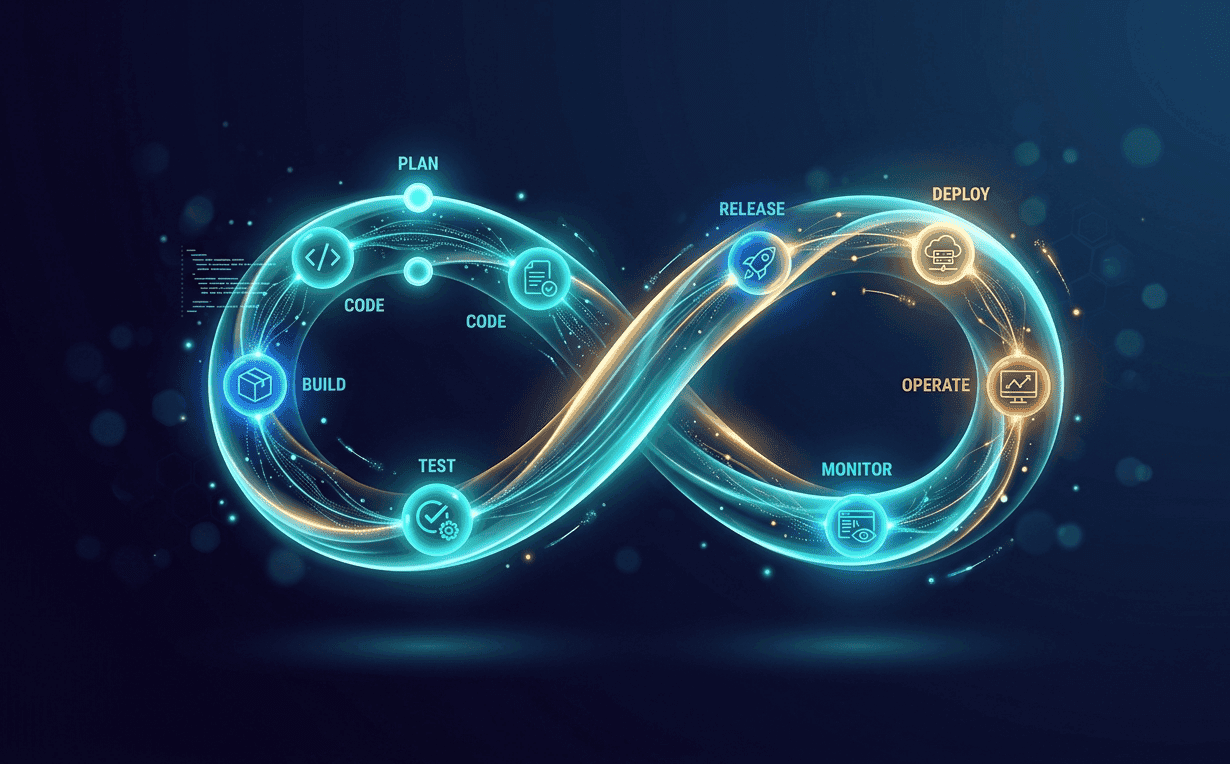
To stay competitive, you need to ship code fast. Saas developers use CI/CD pipelines to automate the testing and deployment process. This reduces the risk of human error and allows for multiple releases per day if necessary.
- Code Commit: Developer pushes code to a shared repository.
- Automated Testing: Scripts run unit tests and integration tests to catch bugs early.
- Staging Deployment: The new code is deployed to a mirror environment for final QA.
- Production Release: The update goes live to users with minimal or zero downtime.
This rhythm is essential for maintaning agile transformation. It allows you to respond to market demands in hours, not weeks, keeping your product at the cutting edge of your industry.
Sector-Specific SaaS Challenges
Not all SaaS products are created equal. Depending on your industry, your saas developers will need to navigate specific technical and regulatory hurdles. We bring specialized knowledge across multiple domains to ensure your product is fit for purpose.
- EdTech: Focuses on high-concurrency during school hours and strict student data privacy. Learn more about our EdTech expertise.
- Travel Tech: Requires heavy integration with third-party APIs and real-time inventory management. See our work in Travel Tech.
- HealthTech: Demands 100% HIPAA compliance and interoperability with legacy hospital systems.
- E-commerce: Prioritizes lightning-fast page loads and secure payment gateway integrations.
Choosing a partner who understands these nuances prevents costly re-engineering down the line. We don't just build general software; we build industry-specific solutions that solve real business problems.
Avoiding Common Pitfalls in SaaS Development
Even the best ideas can fail due to poor execution. We've seen many founders struggle with the same recurring issues. By recognizing these early, your saas developers can steer the project toward success.
Over-Engineering: Don't build a complex microservices architecture when a simple monolith will suffice for your MVP. Start lean and scale as the user base grows.
Ignoring Technical Debt: Rushing to release features without cleaning up your code will eventually slow your development to a crawl. Balance speed with architectural integrity.
Poor API Documentation: If other tools can't talk to your SaaS, you're missing out on the ecosystem effect. Prioritize clear, developer-friendly API docs from the start.
Lock-in Risks: Be wary of becoming too dependent on a single cloud provider's proprietary tools. Use containerization (like Docker) to keep your application portable.
Choosing the Right Cooperation Model
How you engage with saas developers depends on your internal resources and business goals. There is no one-size-fits-all approach to building a technical team. Whether you need a full squad or a few specialists, the right cooperation model is key to maintaining momentum.
Key models include:
- Dedicated Team: An extension of your staff focusing exclusively on your product.
- Staff Augmentation: Plugging specific skill gaps in your existing team.
- Project-Based: A defined scope of work with a clear timeline and budget.
We work with you to determine which model offers the most scalability and cost-efficiency for your current stage. Our goal is to provide the high-energy expertise you need to hit your milestones and secure your next round of funding.
Frequently Asked Questions
What is the difference between a web developer and a SaaS developer?
While both write code for the web, saas developers specialize in the architectural demands of subscription-based software. This includes multi-tenant database design, automated billing systems, and building for high-traffic scalability that a standard marketing website doesn't require.
Which tech stack is best for SaaS?
There is no "best" stack, but popular choices include React for the frontend and Node.js or Python (Django/FastAPI) for the backend. These tools offer large developer communities, excellent libraries, and the performance needed to handle complex SaaS logic efficiently.
How do saas developers ensure data privacy in a multi-tenant environment?
Privacy is maintained through strict data isolation layers. This can be achieved at the database level (separate databases), the schema level, or the application level (using unique identifiers for every data row). Regular audits and automated testing ensure these barriers remain intact.
How long does it take to build a SaaS MVP?
Typically, a functional Minimum Viable Product takes between 3 to 6 months to develop. This timeline depends on the complexity of the core features and the readiness of the product roadmap. Saas developers focus on shipping the most impactful features first to start gathering user data.
Can I migrate my existing software to a SaaS model?
Yes, this is known as digital transformation or application modernization. It involve re-platforming your legacy code into a cloud-native environment. Expert saas developers can help you transition to a multi-tenant model without losing historical data or upsetting current workflows.
What role does DevOps play in SaaS development?
DevOps is critical for SaaS because it facilitates continuous updates. By automating deployment and monitoring, saas developers can ensure the platform remains stable while new features are rolled out. It minimizes "downtime" and allows for a more responsive product cycle.
Future-Proofing Your SaaS Platform
The SaaS landscape is moving toward serverless architectures and low-code integrations. As saas developers, our job is to keep you ahead of these curves. We focus on building modular systems that allow you to swap out components as better technology becomes available.
Investing in high-quality engineering now means you won't have to rebuild your entire platform two years later. We pride ourselves on creating "clean" codebases that are a joy for other developers to work in and easy for your business to scale.
Whether you are at the ideation stage or looking to modernize a legacy system, we are here to provide the technical authority and entrepreneurial energy required to succeed. Let’s build something that doesn't just work—something that wins.
How this article was made. Drafted with AI assistance, then fact-checked and edited by our team. Editorial responsibility: Startup Development House sp. z o.o. Read our AI content policy
Digital Transformation Strategy for Siemens Finance
Cloud-based platform for Siemens Financial Services in Poland


You may also like...

Saas Implementation Services
Implementation is where a SaaS blueprint either becomes a working business or stalls in configuration limbo. This guide covers the core components of SaaS implementation services, the technical integration work involved, and the rollout practices that keep adoption on track. It examines specialised industry implementations, the challenges that most often cause delay, and how to measure whether an implementation actually succeeded. Cooperation models and future trends complete the picture.
Alexander Stasiak
Apr 04, 2026・9 min read

Saas Product Development Agency
A SaaS agency earns its fee in the architectural decisions that keep your platform online and your margins intact. This guide defines what a SaaS product development agency does, why founders choose specialists, and how the SaaS development lifecycle differs from general product work. It covers the technological foundations of modern SaaS, industry-specific challenges, and the total-cost-of-ownership case for expert delivery. The selection mistakes founders repeat most often are examined in detail.
Alexander Stasiak
Apr 05, 2026・7 min read

Cloud Infrastructure Management Services
What expert cloud management delivers — IaC, observability, FinOps, automated security, and self-healing systems aligned to your roadmap.
Alexander Stasiak
Jun 17, 2026・11 min read
Cloud Cost Optimization
Cloud cost optimization done right isn't cost-cutting — it's maximizing value per dollar. The FinOps pillars and automation that cut spend without hurting performance.
Alexander Stasiak
Jun 25, 2026・11 min read

Saas Application Development Services
A SaaS product succeeds or fails on architectural decisions taken long before your first thousand users arrive. This guide covers the architectural pillars of modern SaaS, including tenancy strategy, availability targets and subscription infrastructure. It walks the development lifecycle stage by stage, explains where AI and advanced integrations fit, and lays out the real cost drivers behind a SaaS build. Industry-specific considerations and future-proofing advice help you plan for scale rather than react to it.
Alexander Stasiak
Aug 07, 2026・9 min read

Single Source of Truth Knowledge Management
The average knowledge worker spends one full day every week searching for information or recreating work that already exists somewhere. The root cause isn't a lack of knowledge — it's the absence of a single source of truth. Documents live in three wikis, policies conflict across SharePoint and Google Drive, and institutional knowledge walks out the door with every departure. This guide walks you through exactly how to fix that: from defining what SSOT actually means in practice to implementing it phase by phase, governing it for the long term, and measuring whether it's working.
Alexander Stasiak
Feb 19, 2026・17 min read
Recently added

AI Agents for Clinical Documentation and Medical Administration
How ambient agents draft clinical notes, map billing codes and handle prior authorisation — giving clinicians back the hours the EHR takes away.
Alexander Stasiak
Sep 30, 2026・11 min read

AI Agents for Energy Management in Industrial Facilities
How autonomous agents cut industrial energy bills — peak shaving, HVAC optimisation and grid interaction, executed in real time without a human in the loop.
Alexander Stasiak
Sep 29, 2026・7 min read

AI Agents for Factory Workflow Optimization
How autonomous agents orchestrate the whole factory — resolving bottlenecks, scheduling maintenance and reallocating resources before output suffers.
Alexander Stasiak
Sep 28, 2026・8 min read

Application Development Solutions
Application development solutions cover the entire arc from strategic discovery to continuous scaling, and each phase has its own failure modes. This guide defines what modern solutions include, explains why discovery deserves real investment, and shows where custom engineering beats generic templates. It reviews agile sprint execution, industry-specific requirements and the engagement models that fit different growth stages. Security, compliance and time-to-market trade-offs are treated as engineering concerns rather than afterthoughts.
Alexander Stasiak
Aug 22, 2026・8 min read

Application Development In Cloud Computing
Running an application in the cloud and building it for the cloud are very different engineering decisions. This guide covers cloud-native development properly: the delivery models, the container and orchestration stack, and the CI/CD pipelines that make continuous deployment safe. It walks the lifecycle step by step, addresses the challenges teams hit around cost control and vendor lock-in, and compares long-term economics against on-premise alternatives. Industry examples and forward-looking trends round out the picture.
Alexander Stasiak
Aug 21, 2026・8 min read
Software Engineering Service
Engineering is a discipline of measurable, repeatable practice, and that is what separates a service from simple contract coding. This guide sets out the pillars of high-performance software engineering: strategic discovery, architectural design, rigorous testing and lifecycle maintenance. It compares cooperation models, explains how to choose a technology stack that suits your constraints, and walks a project from ideation to scale. A closing section looks at how AI is reshaping engineering practice itself.
Alexander Stasiak
Aug 20, 2026・7 min read
Ready to centralize your know-how with AI?
Start a new chapter in knowledge management—where the AI Assistant becomes the central pillar of your digital support experience.
Work with a team trusted by top-tier companies.


