Why Is the Design Process Important? Top Reasons Explained

The design process is crucial for creating effective and innovative solutions. Why is the design process important? It provides a clear structure, enhances creativity, and ensures user-centered designs. This guide breaks down these benefits and more, showing you how the design process transforms ideas into successful products.
Key Takeaways
- The design process fosters creativity and innovation by providing a structured approach that encourages diverse perspectives and iterative refinement.
- A user-centered design approach emphasizes understanding user needs through research and feedback, ensuring that final products are functional and meet user expectations.
- Clear communication and a streamlined workflow within teams enhance collaboration and project efficiency, leading to effective problem-solving and successful outcomes.
Enhancing Creativity and Innovation

The design process provides a structured framework that guides creative efforts, making the generation of innovative ideas more systematic. Breaking the process into manageable phases enables designers to generate multiple ideas while generating multiple ideas during the ideation phase, resulting in a wider range of potential solutions. This structured approach not only makes it easier to brainstorm solutions but also helps teams avoid cognitive biases that can stifle creativity.
Involving diverse perspectives during the design process can lead to richer ideas and promote innovative solutions. When designers from different materials and backgrounds come together, the fusion of various viewpoints can spark unexpected innovations. Additionally, the iterative cycles inherent in the design process encourage continuous refinement of ideas, promoting creativity through repeated feedback and testing.
Shifting from problem-focused to solution-oriented thinking within the design process enhances creativity and inspires original new ideas. Focusing on potential solutions rather than dwelling on problems allows designers to unlock new insights and create innovative solutions that push boundaries. This approach not only leads to creative ideas but also ensures that the final design is both practical and a better solution that is groundbreaking.
Improving Problem-Solving Capabilities
The design process provides a structured scientific method to address intricate challenges, allowing for comprehensive exploration of potential solutions. Each second phase in the design process builds on the last, ensuring that all facets of a problem are adequately addressed. This step-by-step approach helps designers develop a clear problem statement and generate multiple ideas for possible solutions, culminating in the third phase.
Iterative testing provides critical insights that facilitate data-driven decision-making. By testing prototypes and gathering feedback, designers can identify what works and what doesn’t, leading to the development of a successful solution. User-centered design, which tailors products to meet specific user contexts and tasks, helps minimize risks of human error and enhances the overall effectiveness of the final solution.
The design thinking process encourages teams to brainstorm solutions and consider a wide range of possible solutions before settling on the best solution. This iterative process not only leads to innovative ideas but also ensures that the final solution is well-rounded and thoroughly vetted. Continual refinement and testing of ideas enable designers to develop solutions that effectively solve complex problems and meet user needs.
Ensuring User-Centered Design
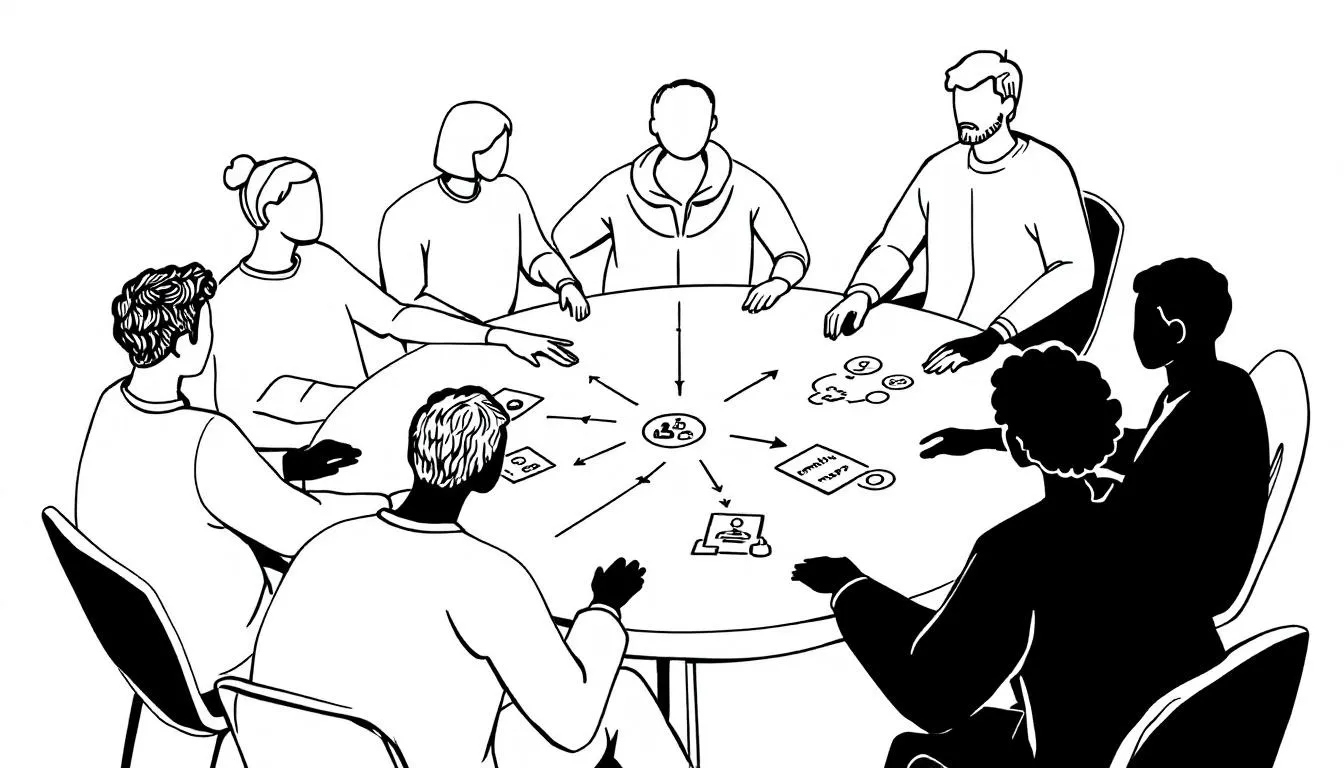
Design thinking emphasizes a user-centered approach that fosters innovative solutions by understanding users’ needs. Conducting user interviews and engaging in UX research provides designers with valuable insights into the preferences and pain points of end users. This information, along with background research, is crucial in defining the requirements for the design project and ensuring that the final design meets user expectations.
Iterative testing enhances product quality through systematic small adjustments over time. Involving users in prototype testing allows designers to gather real-time feedback and make necessary adjustments to improve usability and accessibility. This iterative process ensures that the final design may vary depending on user input, ensuring it is not only functional but also user-friendly.
Real-world examples highlight the importance of user-centered design:
- GE Healthcare enhanced pediatric MRI experiences by redesigning machines to be more inviting, resulting in a significant increase in patient satisfaction.
- Oral B improved its electric toothbrush design by focusing on user needs rather than adding unnecessary features.
- UberEats utilized customer-centered research to enhance its delivery app, addressing specific challenges faced by drivers in urban areas.
Facilitating Better Communication
Effective information sharing enhances collaboration among design team members. The design process provides a predictable sequence of activities, aiding in clearer expectations and reducing misunderstandings. Involving team members from various disciplines, such as psychology and engineering, ensures a well-rounded approach to problem-solving and engineering design project.
Strong communication fosters a cohesive design that aligns with client objectives. Open dialogue within teams can significantly reduce misunderstandings during the design process. Maintaining clear and consistent communication ensures that design teams are aligned and working towards a common goal.
Practical tips for enhancing communication within design teams include regular check-ins and the use of collaborative tools. These strategies can help keep everyone informed and engaged, ensuring that valuable insights are shared and incorporated into the interaction design. By facilitating better communication, the design process becomes more efficient and effective, leading to better project outcomes and allowing teams to communicate results effectively.
Streamlining Workflow and Efficiency
Having a clear design workflow can prevent misunderstandings and reduce the need for extensive revisions. Implementing a streamlined design process can significantly enhance the overall success of a project. A structured workflow allows designers to manage project expectations effectively and align all team members with the project’s goals.
Establishing clear communication channels among team members is vital for an efficient design workflow. A well-defined workflow aids in identifying potential bottlenecks early on in the design process, allowing teams to address issues before they become major problems. This proactive approach ensures that the design process runs smoothly and efficiently.
Utilizing design templates can streamline repetitive tasks and maintain consistency across design projects. Reducing manual work and friction helps teams operate more efficiently and focus on the creative aspects of graphic design. Efficient design workflows can lead to quicker project turnaround, allowing teams to deliver high-quality results in a timely manner.
Iterative Improvement and Testing
A key feature of the entire design process is its iterative nature, which includes:
- Encouraging ongoing refinement of solutions based on feedback
- Leading to successful outcomes through continuous refinement of ideas and prototypes
- Revisiting earlier stages and making adjustments to ensure the final product meets user needs and expectations
Involving users throughout the design process leads to higher usability and accessibility of the final products. User testing might return a design to the idea stage for further refinement, ensuring that the final solution is user-friendly and effective. Real-time feedback during iterative testing aids in making adjustments quickly and efficiently, especially in the final stage of development.
Prototypes are evaluated based on users’ experiences, leading to acceptance, improvement, or rejection. By focusing on continuous feedback loops, design teams can refine their designs and develop innovative solutions that address real-world problems effectively. This iterative approach ensures that the final product is both functional and innovative.
Aligning with Business Goals
Investing in user-centered ui design leads to products that fulfill user expectations, reducing support costs and increasing customer satisfaction. Aligning the design process with business objectives ensures that the final products are effective and strategically sound. By focusing on user needs and business goals, designers can create solutions that drive success and growth for the organization.
Analyzing examples of similar solutions helps identify critical design requirements essential for success. By understanding the key steps and characteristics necessary for creating successful solutions, designers can develop products that meet both user and business needs. This approach ensures that the design process is aligned with the ultimate goal of achieving business success and can also help to challenge assumptions.
As organizations place greater emphasis on measurable outcomes, design practices are becoming more closely integrated with product strategy. Many teams are adopting product-led UX strategy approaches to ensure that user experience decisions contribute directly to product adoption, retention, and business growth. By aligning UX improvements with product goals, designers can prioritize changes that deliver meaningful value to both users and the organization.
Utilizing a solution-based approach in design thinking fosters innovative solutions that align with business goals. Focusing on problem-solving and generating innovative ideas enables designers to create products that meet user needs and support the organization’s strategic objectives. This alignment ensures that the design process contributes to the overall success of the business, especially when considering existing solutions.
Real-World Examples of Effective Design Processes
The design process is crucial for developing efficient and successful solutions across various industries. Key steps in the engineering design process include:
These steps allow for iterative improvement. Following them ensures that designers’ solutions are well-rounded and thoroughly vetted. The design process important for achieving these outcomes.
Netflix has continuously applied design thinking to innovate, such as transitioning from DVD rentals to a successful streaming model. This example highlights the importance of a structured design process in achieving long-term success. Similarly, Airbnb doubled revenue by improving property images based on user preferences, demonstrating effective use of design thinking.
The integration of structured design processes has been key in transforming business models and creating successful outcomes. These real-world examples illustrate the impact of effective design processes in driving innovation and achieving business success.
Overcoming Common Challenges
Common challenges in the design process include unclear problem definitions that lead to misguided solutions. Scope creep can derail project timelines and budgets, necessitating effective management strategies. To manage scope creep effectively, it’s important to clearly define project boundaries and establish a formal process for evaluating scope changes.
Improving the design process can be achieved by reducing manual work and friction, allowing teams to operate more efficiently. Clearly defining and communicating design scope and goals improves the overall design process and project outcomes. Addressing these common challenges helps design teams keep their projects on track and achieve successful results.
The iterative process helps teams avoid costly mistakes by testing small changes early. This approach ensures that potential issues are identified and addressed before they become major problems. By focusing on iterative improvement and testing, design teams can develop solutions that are both innovative and effective.
Summary
The design process is a powerful tool that enhances creativity, improves problem-solving capabilities, ensures user-centered design, and aligns with business goals. By following a structured framework, designers can generate innovative solutions, streamline workflow, and achieve remarkable results. Real-world examples from companies like Netflix and Airbnb illustrate the impact of effective design processes in driving success and innovation.
In conclusion, the design process is essential for creating products that meet user needs, solve complex problems, and support business objectives. By embracing design thinking and iterative improvement, designers can unlock new insights and develop solutions that push the boundaries of what’s possible. As we continue to navigate an ever-changing world, the importance of a well-structured design process cannot be overstated.
Frequently Asked Questions
Why is the design process important for creativity?
The design process is crucial for creativity as it offers a structured framework that encourages systematic idea generation while mitigating cognitive biases. This approach fosters diverse perspectives, ultimately enhancing innovation.
How does the design process improve problem-solving capabilities?
The design process enhances problem-solving capabilities by employing a structured, iterative approach that prioritizes user needs, resulting in more effective and innovative solutions. This methodical focus allows for continuous improvement and adaptation to complex challenges.
What are some real-world examples of effective design processes?
Netflix and Airbnb exemplify effective design processes through their use of design thinking to innovate; Netflix successfully shifted to streaming by understanding user needs, while Airbnb enhanced user experience by optimizing property images.
How does the design process ensure user-centered design?
The design process ensures user-centered design by prioritizing user interviews, conducting thorough UX research, and iteratively testing prototypes to align the final design with user needs. This approach guarantees that the end product resonates with the target audience.
What are common challenges in the design process, and how can they be overcome?
Unclear problem definitions and scope creep are common challenges in the design process. Overcoming these issues requires clearly defining project boundaries, minimizing manual work, and emphasizing iterative improvement to avoid costly mistakes.
How this article was made. Drafted with AI assistance, then fact-checked and edited by our team. Editorial responsibility: Startup Development House sp. z o.o. Read our AI content policy
Published on August 13, 2025
Digital Transformation Strategy for Siemens Finance
Cloud-based platform for Siemens Financial Services in Poland

You may also like...

The Innovation Product Life Cycle: Phases and Strategic Insights
Mastering the innovation product life cycle—from ideation to renewal—gives businesses a competitive edge in a fast-evolving market. This guide unpacks each phase and offers strategic insights to help you plan, adapt, and thrive.
Alexander Stasiak
Jun 24, 2025・10 min read

Smart Mirrors in Retail: Enhancing Shopping Experiences with Technology
Smart mirrors are transforming retail stores by offering interactive shopping experiences, virtual try-ons, and personalized recommendations. With features like augmented reality and real-time inventory integration, these technologies enhance customer engagement and streamline the in-store experience.
Alexander Stasiak
May 14, 2024・9 min read

AI Demand Planner: How It Works and How to Implement It
Market volatility, supply chain disruptions, and rising consumer expectations mean that traditional forecasting methods based on historical averages are no longer sufficient. AI Demand Planner is an advanced technology solution that leverages artificial intelligence and machine learning to accurately predict future demand for products and services. It transforms static data into dynamic business scenarios, enabling companies to optimize inventory and improve operational efficiency.
Alexander Stasiak
Nov 04, 2026・11 min read

S&OP Software – Purpose-Built AI Solutions
Modern supply chain management requires more than just a reactive approach to market shifts. S&OP software—purpose-built and AI-powered—is becoming the foundation for companies looking to synchronize sales planning with operational capabilities in a dynamic, fact-based way rather than relying on intuition. In an era of rising volatility, traditional spreadsheets are no longer enough, creating error risks that directly erode profitability.
Alexander Stasiak
Nov 03, 2026・9 min read

S&OP Implementation – Technical Architecture
Effective Sales and Operations Planning (S&OP) is no longer just a process—it’s a technology challenge. In a modern enterprise, the technology architecture of an S&OP implementation is the foundation that determines whether the organization can respond to market volatility in real time or gets bogged down in outdated spreadsheets.
Alexander Stasiak
Nov 02, 2026・9 min read

S&OP Implementation Roadmap: From Systems Audit to Planning Automation
Effective Sales and Operations Planning (S&OP) is the cornerstone of stability for a modern enterprise. In an era of rising market volatility, relying on intuition or scattered spreadsheets invites costly errors. An S&OP implementation roadmap, from a systems audit to planning automation, helps transform reactive management into a proactive, data-driven strategy.
Alexander Stasiak
Nov 01, 2026・9 min read
Recently added

AI Demand Planner: Demand Forecasting and S&OP in Food Manufacturing
Managing the modern supply chain in the food manufacturing and FMCG sector requires more than just accurate reporting of the past. In the face of increasing market volatility, traditional spreadsheet-based demand planning methods built on moving averages are no longer sufficient.
Alexander Stasiak
Nov 13, 2026・9 min read

AI-Powered S&OP – Automating Sales and Operations Planning
In today’s rapidly changing business landscape, traditional Sales & Operations Planning (S&OP) methods often can’t keep up with market volatility. Manufacturing and trading companies in Poland face disrupted supply chains, sharp demand swings, and information silos that hinder optimal decision-making. AI‑powered S&OP—automating Sales & Operations Planning—is a strategic answer to these challenges, shifting organizations from reactive management to proactive forecasting.
Alexander Stasiak
Nov 12, 2026・9 min read

Demand Forecasting in the Food Industry: How to Leverage AI and S&OP to Reduce Losses?
Managing the supply chain in the food industry is like walking a tightrope. On one side you’re dealing with short shelf lives; on the other, rapid shifts in consumer preferences and seasonality. Forecasting errors are costly—according to market data, the food industry loses billions of euros every year to food waste and lost sales opportunities.
Alexander Stasiak
Nov 11, 2026・11 min read

Demand Forecasting in Manufacturing: How to Integrate AI
In modern manufacturing, intuition-driven planning and simple moving averages are no longer enough. Rising market volatility, supply chain disruptions, and pressure to optimize costs are pushing operations leaders to seek more precise tools. Demand forecasting in manufacturing—how to integrate AI with the existing IT architecture—has become one of the most important questions for the C‑suite today.
Alexander Stasiak
Nov 10, 2026・10 min read

S&OP in Manufacturing: How to Synchronize Demand
Effective management of a modern manufacturing operation requires moving beyond siloed planning. S&OP in manufacturing—how to synchronize demand, production, and inventory—is the key question facing organizations striving to optimize costs and operations. In an era of rapid market shifts, traditional methods based on intuition and static spreadsheets no longer suffice, giving way to advanced data analytics.
Alexander Stasiak
Nov 09, 2026・9 min read

Demand Forecasting in Manufacturing – Leveraging AI
Effective demand forecasting in manufacturing—AI is becoming the foundation of the modern supply chain. In an era of global market volatility, traditional statistical methods based on moving averages often fall short, leading to costly planning errors. Implementing advanced machine learning algorithms enables organizations to transform reactive planning into a proactive business strategy.
Alexander Stasiak
Nov 08, 2026・8 min read
Ready to centralize your know-how with AI?
Start a new chapter in knowledge management—where the AI Assistant becomes the central pillar of your digital support experience.
Work with a team trusted by top-tier companies.


